

The idea of an endoscopy may sound worrying to some people. Modern medicine offers various other diagnostic tools to evaluate your digestive health, so understandably, you might be nervous about a slightly more invasive procedure and prefer to avoid it if possible.
However, while medical imaging can provide a detailed overview of your body, it works very differently from endoscopies, and both tests serve different purposes in resolving gastrointestinal symptoms and colorectal conditions.
When you visit a specialist with concerns about your digestive health, they may strongly recommend one type of test over the other. Thus, knowing how these tests differ and why a doctor might choose one over the other can alleviate anxiety and help you feel more prepared for your next appointment.
What Is an Endoscopy Procedure?
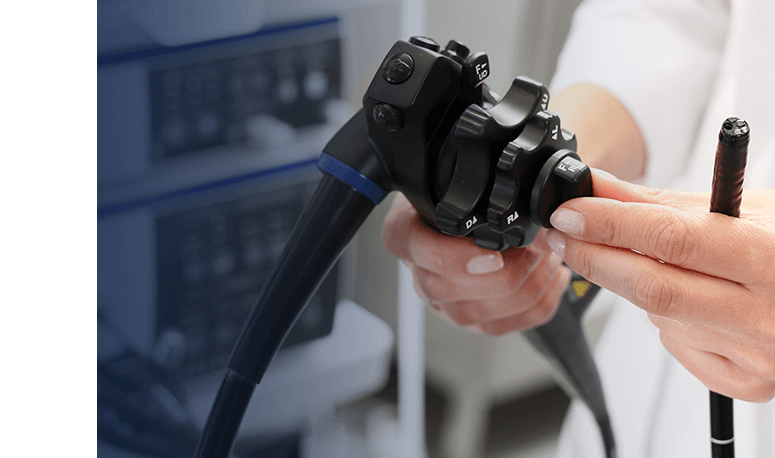
Endoscopy refers to a group of procedures that provide direct access to the inside of the body. During an endoscopy, a flexible instrument called an endoscope is gently inserted into the gastrointestinal tract, allowing a doctor to visually examine the lining of the oesophagus, stomach or intestines using a small camera attached to the instrument.
Endoscopy allows specialists to:
- View mucosal lining in real time
- Identify abnormalities such as inflammation, ulcers, polyps or bleeding
- Collect tissue samples (biopsies) for laboratory analysis
- Perform certain therapeutic interventions during the same procedure
What Is Medical Imaging?
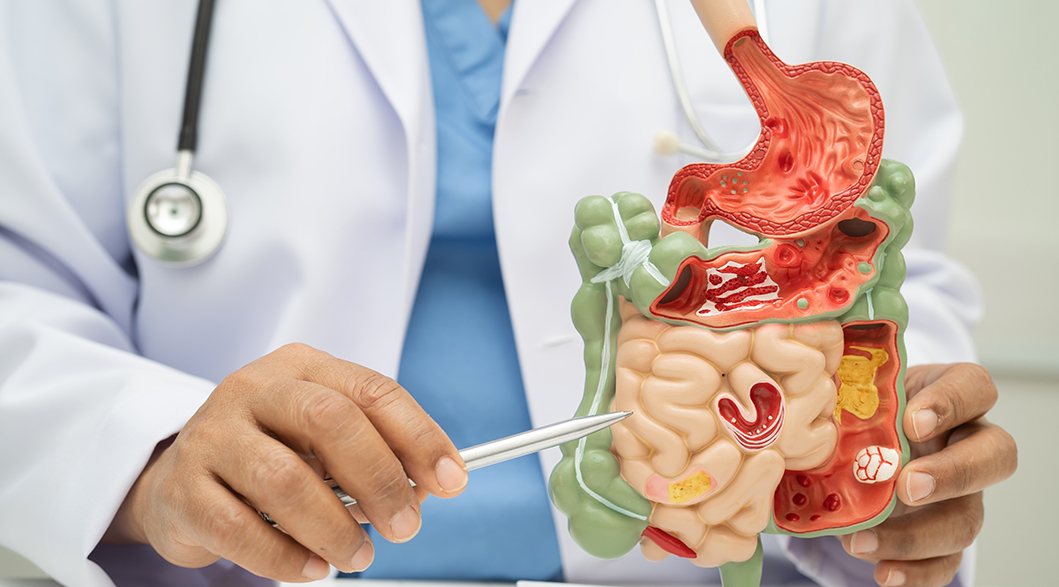
Medical imaging encompasses a range of non-invasive techniques used to produce visual images of structures inside the body. Rather than examining the surface of the digestive lining, as endoscopy does, imaging focuses on showing the shape, position and internal structure of organs and tissues.
In the evaluation of digestive and abdominal conditions, several imaging methods are commonly used, including:
- Ultrasound: High-frequency sound waves are used to create images, often to assess organs such as the liver, gallbladder and kidneys.
- Computed Tomography (CT) Scans: This technique uses X-rays to produce detailed cross-sectional images of the body, helping to identify abnormalities or complications.
- Magnetic Resonance Imaging (MRI): Magnetic fields and radio waves are used to generate detailed images of soft tissues, which can be useful for evaluating certain digestive conditions.
- X-rays: Standard X-ray imaging provides basic views of dense structures and may help detect blockages, gas patterns or other structural changes.
When Is Medical Imaging Sufficient?
In certain clinical situations, medical imaging may be the preferred first step or the only test needed. Imaging is particularly useful when a doctor needs a broad assessment of the abdominal organs or is investigating a suspected acute condition.
Imaging may be selected in situations such as:
- Evaluating Acute Abdominal Pain: Conditions such as appendicitis, diverticulitis or bowel obstruction are often best assessed with a CT scan.
- Assessing Adjacent Organs: When problems involving the liver, pancreas or gallbladder are suspected, ultrasound or MRI is commonly used.
- Disease Staging: After a diagnosis has been made, imaging helps determine whether the condition has spread to other parts of the body.
- Patient-Related Limitations: For individuals who cannot tolerate sedation or have significant heart or lung conditions, CT colonography, also known as virtual colonoscopy, may be used as an alternative to standard colonoscopy.
When Is Endoscopy Necessary?
Endoscopy is generally considered when direct examination of the gastrointestinal lining is required. Situations where an endoscopy test may be recommended include:
- Persistent Gastrointestinal Symptoms: When a patient experiences ongoing heartburn, acid reflux, difficulty swallowing or persistent nausea, an upper endoscopy is often needed. These symptoms are usually related to inflammation or damage to the lining of the oesophagus or stomach, which involves surface changes that imaging tests such as CT scans may not capture accurately.
- Rectal Bleeding or Blood in Stool: Visible blood in the stool or a positive faecal occult blood test usually requires direct investigation via colonoscopy. While imaging can show large masses, it cannot reliably identify many common sources of lower gastrointestinal bleeding, such as small vascular malformations, haemorrhoids or early-stage cancers.
- Detection and Assessment of Polyps: Colorectal cancer often begins as small growths called polyps. Colonoscopy—a type of endoscopy—is the only method that can reliably detect small, flat or pre-cancerous polyps and remove them in the same procedure. This capability makes colonoscopy a powerful tool for cancer prevention, rather than just detection.
- Clarifying Abnormal Imaging Findings: When a CT scan or ultrasound shows thickening of the stomach wall or a mass in the colon, an endoscopy is usually required to clarify the finding. Using a camera, the doctor can closely examine the area highlighted on the scan and obtain a biopsy to determine whether the abnormality is benign or malignant.
- Obtaining a Tissue Sample: Certain conditions can only be diagnosed by looking at cells under a microscope. For example, Coeliac disease involves damage to the small intestine that is often invisible to the naked eye and on scans; it requires a biopsy taken during a gastroscopy. Similarly, checking for H. pylori infection in the stomach often requires a tissue sample.

How Does a Doctor Determine Which Procedure to Suggest?
A specialist will determine which diagnostic method is appropriate based on several requirements that the procedure must fulfil:
Ease of Visualisation
Endoscopy provides a direct, high-definition view of the mucosal lining (the inner surface) of the digestive tract. This allows doctors to detect subtle changes, such as early inflammation or flat polyps, which may be invisible on a scan. Imaging, conversely, is excellent for seeing the structure of the abdominal cavity, the thickness of the bowel wall and the relationship between the bowel and surrounding organs.
Biopsy Capability
If an abnormality is seen during an endoscopy, the doctor can pass small instruments through the endoscope to take a biopsy immediately. Most standard imaging tests are diagnostic only; they can show a mass, but they cannot take a sample of it without a separate, invasive procedure that has to be scheduled for another date.
Therapeutic Intervention
Endoscopy is often therapeutic as well as diagnostic. This means doctors can treat certain conditions during the exam. For instance, during a colonoscopy, a doctor can remove polyps, stop bleeding ulcers or widen narrowed passages. Imaging is primarily used for diagnosis and planning, but generally does not allow for immediate treatment of the condition found.
Invasiveness
Imaging is generally non-invasive, painless and quick. Endoscopy is considered an invasive procedure because an instrument is introduced into the body. While safe, it typically requires bowel preparation (for colonoscopy) and may require sedation, requiring a short recovery period after the appointment.
Extent and Complications of Disease
Endoscopy allows the doctor to see active inflammation, ulcers or bleeding sources in real-time. Imaging is often better suited for identifying functional issues like obstructions, perforations or fluid collections that affect the broader abdominal area.
Get Expert Assessment for Digestive and Colorectal Symptoms
Ultimately, the choice between endoscopy and imaging is not one you need to make alone. If you are experiencing gastrointestinal discomfort or suspect that you may have a colorectal condition, it is advisable to visit a colorectal specialist clinic to clarify the cause of your symptoms and determine the most appropriate next steps.
Led by Dr Dennis Koh, Dr Sharon Koh Zhiling, and Dr Pauleon Tan Enjiu, our clinic offers comprehensive medical management for colorectal conditions. We take a personalised approach to care, recommending investigations based on your medical history, symptoms and risk profile, with a focus on achieving an accurate diagnosis while minimising risk and discomfort.
Contact our clinic today to schedule a consultation with our experienced specialists. We are here to guide you through the process with care and expertise.