

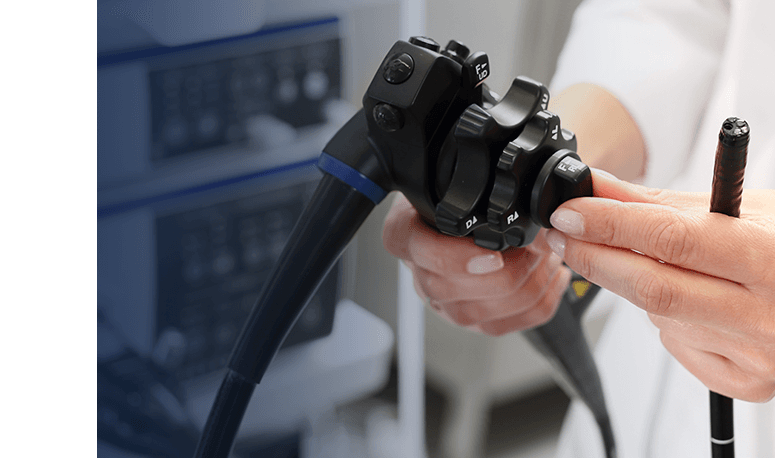


Dr Dennis Koh
Medical Director & Senior Consultant Colorectal Surgeon
MBBS (Nottingham), B Med Sci (Nottingham), MMed (Surgery), FRCS (Edinburgh), FAMS

Dr Sharon Koh Zhiling
Senior Consultant Colorectal Surgeon
MBBS (Singapore), MMed (Surgery), FRCS (Edinburgh), FAMS

Dr Pauleon Tan Enjiu
Senior Consultant Colorectal Surgeon
MBBS (Singapore), MMed (Surgery), FRCS (Edinburgh), FAMS
Colorectal cancer can develop without causing noticeable symptoms in its early stages. Screening is therefore recommended for people who meet certain age or risk criteria, while earlier specialist assessment may be appropriate for those with a family history, previous colorectal polyps or concerning bowel symptoms.
A colorectal cancer specialist can assess your individual risk and advise whether screening or further investigation is appropriate. The recommended approach depends on factors such as your age, medical and family history, previous screening results and whether you currently have symptoms.
Who Should Consider Seeing a Specialist for Colorectal Cancer Screening?
Screening recommendations depend on your age and individual risk of colorectal cancer. Some people can follow routine screening recommendations, while those with certain personal or family risk factors may need to begin earlier or undergo more frequent surveillance.
Adults Who Meet the Recommended Screening Age
Colorectal cancer risk increases with age. Adults at average risk should begin screening according to current national recommendations, even if they have no bowel symptoms. A specialist can advise which screening method is appropriate based on your health and previous screening history.
People With a Family History of Colorectal Cancer
Having a close relative with colorectal cancer or advanced colorectal polyps may increase your risk, particularly when the relative was diagnosed at a younger age. Inherited conditions such as familial adenomatous polyposis (FAP) and Lynch syndrome can increase colorectal cancer risk further and usually require a personalised surveillance plan.
People With Previous Polyps or Colorectal Cancer
People who have previously had colorectal polyps, particularly advanced or multiple polyps, may require surveillance at shorter intervals. A previous colorectal cancer diagnosis can also affect how frequently colonoscopy and specialist follow-up are recommended.
What Symptoms Should Prompt Assessment by a Colorectal Cancer Specialist?
Colorectal cancer screening is intended primarily for people without symptoms. If concerning bowel symptoms develop, you should seek medical assessment rather than wait until your next routine screening. Depending on the symptoms and clinical findings, a specialist may recommend diagnostic investigations such as colonoscopy:
- Blood in the stool or rectal bleeding: Bright red blood or dark, tar-like stools may indicate bleeding within the digestive tract and should be assessed.
- Persistent changes in bowel habits: Diarrhoea, constipation or a noticeable change in stool frequency lasting more than a few weeks warrants further investigation.
- A feeling of incomplete bowel emptying: Regularly feeling that the bowel has not emptied fully may indicate a change affecting the colon or rectum.
- Persistent abdominal discomfort: Ongoing or unexplained abdominal pain or cramping may warrant assessment, particularly when accompanied by bowel changes, bleeding or weight loss
- Unexplained weight loss or reduced appetite: Losing weight without changes to diet or physical activity can be a warning sign that requires medical evaluation.
- Persistent fatigue or iron-deficiency anaemia: Slow bleeding from the digestive tract may lead to low iron levels, weakness, breathlessness or ongoing tiredness.
What Colorectal Cancer Screening Tests May Be Recommended?
The appropriate screening method depends on factors such as your age, colorectal cancer risk, previous findings and medical history. Common options include the faecal immunochemical test (FIT) and colonoscopy, while other tests may be considered in selected circumstances.
Colonoscopy
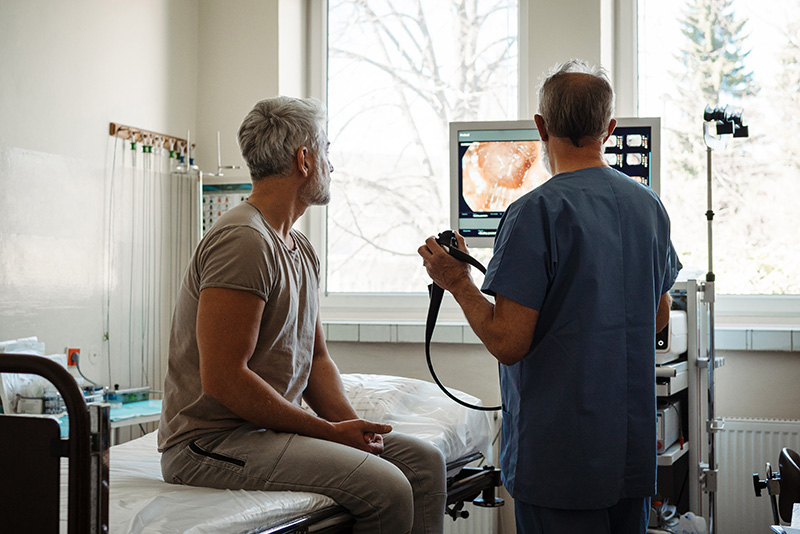
Colonoscopy allows the specialist to examine the lining of the entire colon and rectum using a flexible camera. If polyps or suspicious areas are identified, they can often be removed or biopsied during the same procedure.
Bowel preparation is required beforehand, and the procedure is commonly performed under sedation. Any tissue removed is sent for laboratory examination, with the findings helping determine whether further treatment or surveillance is needed
Faecal Immunochemical Test (FIT)
FIT is a non-invasive stool test that detects small amounts of blood that may not be visible. No bowel preparation or sedation is required.
A negative result does not eliminate future colorectal cancer risk, so screening should still be repeated at the recommended interval. A positive FIT does not necessarily mean cancer is present, but colonoscopy is generally required to identify the source of bleeding.
Other Screening Methods
Other investigations, such as CT colonography or flexible sigmoidoscopy, may be considered in selected circumstances. These tests have different limitations and may still need to be followed by a conventional colonoscopy if an abnormality is detected.
A colorectal cancer specialist can recommend an appropriate approach based on your risk factors, medical history and previous screening results.
Prevent Colorectal Cancer Before it Happens
Colorectal cancer can develop without noticeable symptoms in its early stages, making timely screening important. Adults aged 50 and above should consider routine screening, while those with a family history, previous polyps or other risk factors may need to begin earlier. Anyone experiencing persistent bowel changes, rectal bleeding or unexplained weight loss should seek medical assessment rather than wait for routine screening.
At our colonoscopy clinic, we provide individualised colorectal cancer screening based on each patient’s age, health history and risk factors. Led by Dr Dennis Koh, alongside Dr Sharon Koh and Dr Pauleon Tan, our clinic can explain the available methods, including FIT and colonoscopy, then recommend an appropriate screening or investigation plan. Book an appointment for a specialist assessment and take a proactive step towards protecting your colorectal health.
FAQs About When to Get Screened for Colorectal Cancer
Are all polyps found during a colonoscopy cancerous?
No. Most colorectal polyps are benign when detected, but certain types can gradually develop into cancer. Removed polyps are usually examined in a laboratory to determine their type and whether closer surveillance or additional treatment is needed.
What happens if bowel preparation is incomplete?
Poor bowel preparation can leave stool inside the colon, making it difficult to identify small polyps or abnormal tissue. The specialist may need to stop the examination, repeat the colonoscopy earlier or recommend additional preparation before another attempt.
Do I still need screening after a normal colonoscopy?
A normal colonoscopy substantially reduces the likelihood of significant colorectal abnormalities at that time, but it does not eliminate future risk. When screening should be repeated depends on the examination quality, family history, new symptoms and any changes in your health.
Can bleeding haemorrhoids cause a positive FIT result?
Yes. FIT detects human blood in the stool but cannot identify where the bleeding originated. Actively bleeding haemorrhoids may therefore produce a positive result. However, the result should not be dismissed, as polyps or colorectal cancer can also cause hidden bleeding. Speak with your doctor about whether further investigation or repeat testing is appropriate.
Meet Our Colorectal Cancer Specialists in Singapore

Dr Dennis Koh
Medical Director & Senior Consultant Colorectal Surgeon
MBBS (Nottingham), B Med Sci (Nottingham), MMed (Surgery), FRCS (Edinburgh), FAMS
Dr Dennis Koh is an experienced colorectal surgeon dedicated to the prevention and treatment of colorectal cancer. Having received the SingHealth Health Manpower Development Plan (HMDP) Award, he furthered his colorectal training at the Hôpitaux Universitaires de Genève (HUG), Switzerland, and was a Consultant Colorectal Surgeon at the Singapore General Hospital prior to setting up his own practice.

Dr Sharon Koh Zhiling
Senior Consultant Colorectal Surgeon
MBBS (Singapore), MMed (Surgery), FRCS (Edinburgh), FAMS
Dr Sharon Koh is a general surgeon with subspecialty training in colorectal surgery, minimally invasive surgery and advanced endoscopy. She obtained her accreditation as a specialist in General Surgery in 2014 after advanced surgical training in both National University Hospital and Singapore General Hospital. Prior to joining Colorectal Practice as a Senior Consultant Surgeon, she was the Director of Endoscopy at Alexandra Health of National University Health Services.

Dr Pauleon Tan Enjiu
Senior Consultant Colorectal Surgeon
MBBS (Singapore), MMed (Surgery), FRCS (Edinburgh), FAMS
Dr Pauleon Tan is a general surgeon who completed his specialist training and became a Fellow of the Royal College of Surgeons in Edinburgh in 2016. Having been awarded the Ministry of Health – Health Manpower Development Plan (HMDP) Award, he furthered his advanced colorectal surgical training in one of the top 5 units in Japan at Saitama International Medical Center.
